Two Years On From the Disability Royal Commission: What We Heard and What Needs to Change
Friday 13 February
For over four and a half years, the disability community laid bare the violence, abuse, neglect and exploitation we have endured and continue to experience through the Disability Royal Commission (DRC). In September 2023, the Royal Commission released their final report.
The Royal Commission made 222 recommendations outlining ways that governments can improve laws, policies, structures and practices to ensure a more inclusive and just society that supports the independence of people with disability and their right to live free from violence, abuse, neglect and exploitation.
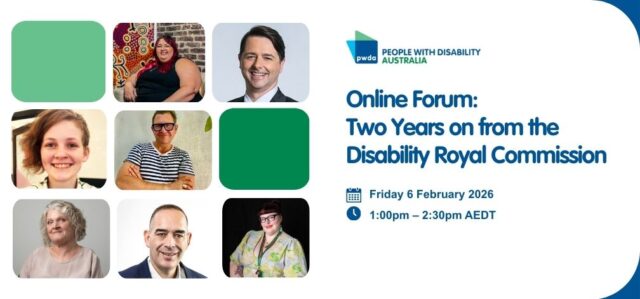
Two years on from that report, PWDA hosted a national online forum ‘Two Years On From the Disability Royal Commission’ to take stock. While initially scheduled for September 2025, the event was postponed due to sickness until Friday 6 February 2026.
The forum asked a simple but important question: is real change happening for people with disability?
Disability leaders, advocates and community members came together to reflect on progress so far, share their lived experience, and talk honestly about where governments are falling short.
Skip to:
Welcome to Country w/ Daniel McDonald
Returning to the vision of the Royal Commission w/ Summer Farrelly
Lived experience, Intersectionality and Systemic Harm w/ Tahlia- Rose Vanissum
A Frank Look at Government Response w/ Rosemary Kayess
What Progress Looks Like w/ Megan Spindler-Smith and Alistair McEwan
What PWDA is Focusing on Next w/ PWDA Systemic Advocacy
This forum isn’t about listening and listing announcements. It’s about accountability, implementation, whether the Royal Commission’s vision is being realised.
PWDA President, Jeramy Hope
We acknowledge conversations around the Royal Commission can bring up strong emotions and difficult memories. To ensure the forum remained a safe space, participants were encouraged to engage in whatever way felt safe and accessible for them.
Additional support was made available to attendees through the event and for a short time after. The registered psychologist providing support throughout the event shared additional wellbeing tips, in case anything comes up when engaging with the content.
Welcome to Country – Equal Time is Now
Equality doesn’t mean that we start at the same level.
Daniel McDonald
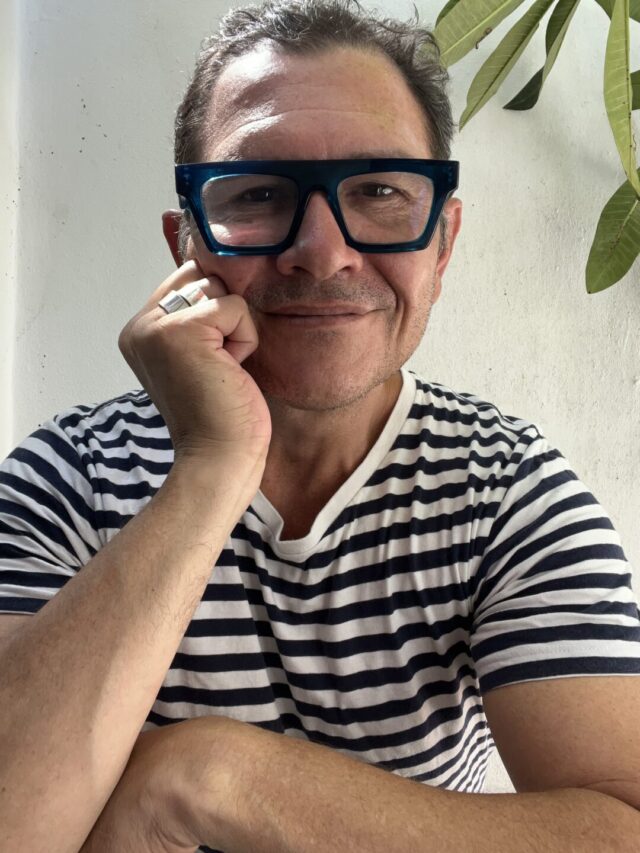
We opened with a Welcome to Country from Daniel McDonald, Gadigal and Wonnarua Man and PWDA member, who reminded us that equality is not about everyone starting in the same place.
Instead, it is about making sure people have what they need to participate fully, safely and with dignity. His message set a clear tone for the forum. One grounded in respect, inclusion and shared responsibility.
Thank you so much, Jeramy. Thank you for inviting me for this online session today.
My name is Daniel. Daniel McDonald. My pronouns are he/him. I’m wearing a white coloured T-shirt with a logo on it with some stripes. I have short brown hair. I have blue glasses, brown eyes, and I am Deaf.
So I am a very proud Aboriginal man and an artist, and I use the name Deadly Hand Talk. I’m here today to Welcome you to Country on Gadigal Country.
I would like to pay my respect to all Aboriginal elders, past and present, and I would like to respectfully acknowledge any Aboriginal and Torres Strait Islander brothers and sisters that are joining us here today. It doesn’t matter which Aboriginal nation that you come from, whether you’re indigenous or not indigenous, we are all brothers and sisters as we joyfully gather here today at this meeting place.
I think it is only right that we honour the traditional custodians of the lands and waters.
So today we have a special event to reflect on the two years since the Disability Royal Commission. So I’d like to express my thanks for inviting me to this event. And I would like to give you my story from my heart.
Actually, it is a combination of a story called Equal Time is Now. So walking along the road, nobody knows who we are. Nobody knows what we can see. There can be others around us. But we can be equal if we are given the opportunity.
Equality doesn’t mean that we start at the same level. We are all at different levels at the beginning and some of us might need a little bit of a boost to see over the fence. Look at the different diversity that we have available when you really think about it.
We have disabilities with our brothers and our sisters. Most of our families and our friends understand us. But in government and in the corporate world, we could sometimes do with some nurturing so then we can grow some beautiful flowers.
No one knows what the time is now. There’s so much to do. You think that you might be able to cope or you can’t cope. There’s always somewhere to go, someone to see.
You struggle with things, things going on in your mind. Thinking about all the things that you have to do. The mind can find calm and strength. So sit down and think of your power. Equal time is now.
From Gadigal land today, remembering the past and the present, acknowledgement, inclusion, understanding, understanding each other, respecting each other. So please, be safe and enjoy this event today online. Thank you.
And thank you for Rhonda for interpreting for me. And back to you, Jeramy. And thank you, for you and for PWDA, and I look forward to hearing more about the discussions from today. Have a fabulous day. Bye.
Returning to the vision of the Royal Commission
Accommodation is not a favour, acceptance is not conditional.
Summer Farrelly
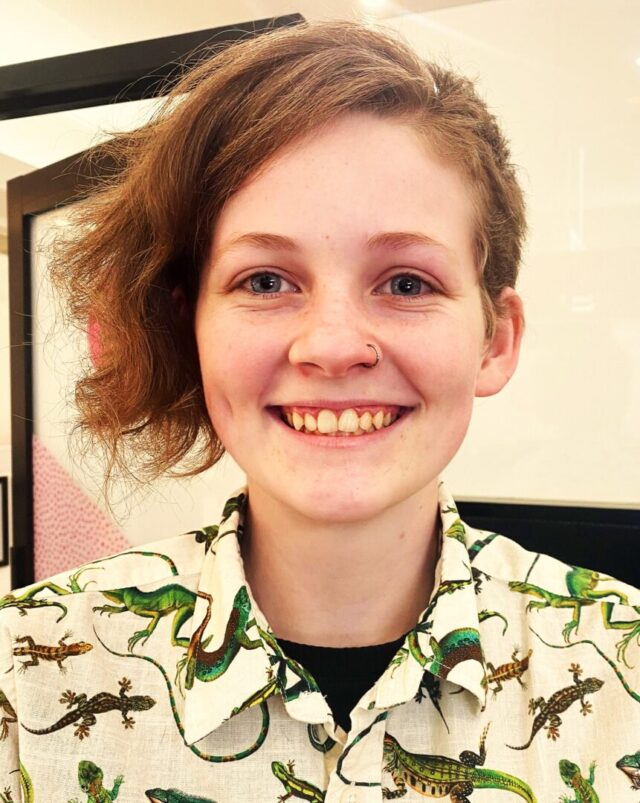
Following Daniel’s Welcome to Country, PWDA President Jeramy Hope introduced our next speaker, Summer Farrelly. Summer is an Autistic Advocate, Public Speaker, Inclusion and Education Consultant Disability Rights Leader who reflected on the original purpose of the Disability Royal Commission and the future that it promised.
Summer spoke about inclusion as being able to live, learn and participate as your authentic self. About not needing to mask, explain or change who you are to belong. They also acknowledged how tired and worn down many people feel, while reminding us that the vision of an inclusive Australia is still worth fighting for.
Hello. To give a quick visual description, I have shaggy blonde hair, a little bit fluffy, you would argue. I have blue eyes. I should take a breath, and come down there is a lot of people. Hello, everybody. And I think I will just – dark shirt. I think it is AC/DC. And I will get right into it.
So good afternoon, everyone. Or good morning, depending on where you are. I would like to start by acknowledging the moment that we’re in because it would feel dishonest not to. Hope feels hard to hold right now for many people. Many of us are really tired. Some of us are carrying disappointment, grief or exhaustion and we’re still showing up. So if you’re here today feeling heavy, I want you to know that you’re not alone.
In December of 2022, I sat before the Disability Royal Commission and shared my vision of what an inclusive Australia could look like. At the time that vision felt urgent but it also felt possible. Today I want to return to that vision. Not because everything has progressed the way we hoped but because this forum sits early in the program. I think that it matters that we reanchor ourselves in the ambition of the Royal Commission and the future that it promised.
When I spoke to the Commission I said that inclusion looked different to everybody because everybody is different. This has not changed. To me, inclusion means being able to contribute and participate in society as your authentic self without having to change who you are to be accepted by your community. It means not having to mask, not having to perform, not having to translate yourself constantly just to belong.
Inclusion means access but access with choice. It looks like services offering different ways to engage, whether that’s face-to-face, email, Zoom, whether it’s phones, and, more importantly, it means respecting that people should be able to choose how they engage, rather than being directed to whatever is the easiest and most convenient option for the system that you are in.
Choice is not a luxury. Choice is dignity.
Inclusion means being able to access your rights without having to require constant support or intervention just to get through the door. Because needing support should never be the price of entry to basic human rights.
Inclusion means that the diversity of your neurotype, physical capacity, mental health, race, culture, gender identity, or even age is not treated as a factor that reduces your value, your credibility or your likelihood of being involved or included. It means that we stop organising society around a single default way of being human because there is no single way to be human.
When one neurotype or one identity sets the social norms and those norms are facilitated in ableist ways, everybody is left adapting, masking or being excluded. This isn’t inclusion. This is assimilation. A truly inclusive Australia recognises that difference is not a problem to be managed; it is a reality to be respected.
This is where education becomes critical. Inclusion does not happen accidentally. It requires intention, structure and commitment and education is the vehicle that makes inclusion possible, not awareness, but acceptance.
Inclusion means education is accessible in multiple ways because learning happens in multiple ways. There’s different learning styles, different communication systems, different languages, different cognitive and sensory needs.
Inclusion means the people and positions of authority, educators, leaders, professionals and decision-makers are educated first. Understanding diversity and inclusion safety cannot be optional. It cannot be an add-on or an extra. It must be foundational.
Teachers and educators, in particular, share the environments where people spend most of their lives. This training must be built on protecting diversity and creating spaces where people feel safe to be their authentic selves. Accommodation is not a favour, acceptance is not conditional.
Inclusion also means celebrating differences in communication. It means committing to learning how someone needs to communicate rather than expecting them to learn a style because it’s more widely accepted by most people. That doesn’t make it okay. It means welcoming people when they tell us how they need to be educated, supported or even just included.
Because beneath all our differences there is one thing: Every single person shares, and it is an internal desire to hold value and feel included.
A truly inclusive Australia doesn’t just tell people they matter; it shows them through systems, structures and everyday practice.
I often come back to what I and many other people refer to, the AAA framework. Authenticity, acceptance and autonomy. Authenticity is the right to be who you truly are. Acceptance is being welcomed without conditions. And autonomy is being able to access your rights without constantly needing intervention to do so. It should just be accessible. These aren’t abstract ideals. They protect dignity, they reduce harm, they prevent people from becoming exhausted just trying to exist within a system that was built for others.
Now, I want to be honest about where we are. Some progress has been made since the Disability Royal Commission. Some promises have stalled and some days it feels like we have just gone backwards. That’s how it is. Holding hope can feel exhausting. Especially when you’re also holding on to lived experience, advocacy and the emotional weight that comes with both. Not everyone has the spoons every day and no one should be expected to do this alone.
Holding governments and systems accountable was never meant to be the work of individuals acting in isolation; it is collective work and we are working together. At different times, different people step forward. Others rest. Some support from the ageists, that’s how movements are, how they survive.
Today you are feeling strong. Thank you for stepping forward. Today if you are feeling tired you still belong here whether you are watching the recording or sitting quietly, the fact that you’re here and the fact you still have that opinion matters.
The vision of an inclusive Australia is still worth holding, not because it’s easy but because it is necessary, because value exists in diversity and because people deserve to be their authentic selves and because inclusion, when done properly, is going to make life better for absolutely everybody.
Thank you for coming today. Or however you’re here listening. Thank you so much for being here. And you’re doing amazing.
Before moving on to our next speaker, Jeramy thanked Summer for “reminding us of the future the Royal Commission promised and the standard we’re holding government to.”
Lived experience, intersectionality and systemic harm
Systems designed without us will continue to harm us.
Tahlia-Rose Vanissum
Next we heard from Tahlia-Rose Vanissum – Woppaburra Woman, First Nations Disability and Gender Justice Advocate and PWDA Board Director.
In a pre-recorded message, Tahlia-Rose spoke to what the Royal Commission confirmed, rather than revealed. That violence, neglect and exclusion are built into our systems.
The Royal Commission did not reveal harm, it confirmed what people with disability, our families, our communities have been saying for decades.
Her message highlighted the ongoing harm experienced by First Nations people with disability and stressed that reform cannot succeed without First Nations leadership, lived experience and real power in decision-making.
A frank look at government response
The government response to the Disability Royal Commission has been underwhelming at best and a moral failure at worst.
Disability Discrimination Commissioner, Rosemary Kayess
Disability Discrimination Commissioner, Rosemary Kayess pre-recorded message ‘followed with a clear assessment of how governments have responded to the DRC so far.
She described the response as disappointing, noting that while some reform is underway — particularly around the Disability Discrimination Act — much more is needed. Rosemary emphasised the importance of strong legal protections, accountability and independent monitoring to prevent violence, abuse and neglect.
A national Human Rights Act would be a much stronger response.
Disability Discrimination Commissioner, Rosemary Kayess
Due to unforeseen technical difficulties, the recording from prior to the 5-minute break did not save. We have provided summary, pre-recorded messages and transcripts of speakers where no recording exists.
What progress really looks like
Does the Federal Government care about us? That’s the big question.
Dr Alastair McEwin AM
After our short break, PWDA Acting CEO Megan Spindler-Smith and former Royal Commission Commissioner Dr Alastair McEwin AM discussed what has — and hasn’t — changed in the two years since the final report.
For as long as you have segregated settings in place, the incentive to transform mainstream settings will move very slowly.
Dr Alastair McEwin AM
They spoke openly about:
- Slow and fragmented implementation
- Continued reliance on segregated systems
- The lack of clear timelines and accountability
- The need for people with disability in leadership roles
PWDA ran polls during the session that showed most participants agree there has been little to no meaningful progress in the last two years.
PWDA doesn’t control government decisions but we do control how strongly we can advocate.
PWDA President, Jeramy Hope
What PWDA is focusing on next
Following on from the conversation with Alistair, PWDA’s Acting Director of Systemic Advocacy joined Megan to outline our current priorities, that have been shaped by member and community consultation.
These focus areas include:
- Ending segregation and restrictive practices
- Strengthening disability rights and legal protections
- Improving safeguards, oversight and accountability
- Making sure people with disability lead reforms
PWDA emphasised the need for government to move beyond making announcements. The government must move toward actions that provide appropriate funding to support people with disability, clear timelines on changes and public reporting to ensure they are accountable for action.
A key focus of our work right now is pushing government to move from announcements to implementation.
Michelle Keogh
Looking ahead
The Disability Royal Commission was never meant to be the final step. It was meant to be the start of lasting change.
PWDA will continue to push for reform that is measured not by promises, but by real improvements in safety, inclusion and dignity for people with disability. We reaffirm our commitment to holding governments to account and amplifying the voices and expertise of people with disability.
The message from the forum was clear: accountability matters and people with disability must remain at the centre of reform.
The benchmark we continue to measure progress against is whether people with disability are safe, respected, included and supported.
Acting CEO Megan Spindler Smith
ENDS