NDIS changes: what we know so far and what it means for our community
Tuesday 28 April
We know many of our members are feeling worried, confused and overwhelmed right now.
The Australian Government has announced major changes to the NDIS, outlined by Minister for Health, Disability and Ageing Mark Butler at the National Press Club on 22 April 2026.
Some details are clear. Many are not.
This is what we know so far, what we don’t know, and what it could mean for you.
In this blog:
- What we know
- Key changes
- What we don’t know yet
- PWDA’s concerns
- What this means
- What PWDA is doing
- How you can take action
- A message to our community
What we know
The Government has said it wants to:
- slow the long-term growth of the NDIS to around 5 to 6 per cent, with a 2 per cent growth target for each year until 2030
- make changes to who can access the scheme
- change how decisions are made about support
- reduce spending in some parts of the scheme
- improve quality and reduce fraud
There are currently around 760,000 people on the NDIS.
The Government has indicated it expects participant numbers to be around 600,000 by the end of the decade. The Government has not set out exactly how this change will be achieved or which groups it expects will be affected.
This suggests a significant reduction in growth over time and may mean fewer people entering or remaining on the scheme, but the exact impact is not yet clear.
When will these changes happen?
The Government has said these changes will be rolled out over time, with some starting from 2026, a new planning framework now delayed until 1 April 2027, and new eligibility and supports needs assessment processes expected from 2027 to 2028.
Key changes explained
1. Changes to who can access the NDIS
The Government has announced a move away from diagnosis-based access.
Instead, eligibility will be based on:
- how a person’s disability affects their day-to-day functioning
This will involve new standardised functional assessments.
These changes are still being developed.
These new eligibility rules and assessment processes are expected to be introduced from 2027 and phased in through to 2028.
2. New framework planning has been delayed
The Government has confirmed that the new NDIS planning framework will be delayed until 1 April 2027.
This reflects that:
- the system is not yet ready
- more design work is needed
While this delay is important and welcomed by PWDA, it also means:
- key details about how decisions will be made are still unknown
- further changes are still to come
3. Changes to social and community participation
The Minister has said that spending on social and community participation has increased significantly.
This is the part of the NDIS that supports people to:
- leave the house
- connect with others
- take part in everyday community life
The Minister said spending in this area has grown from around $4 billion a year to around $12 billion a year.
He also said the Government intends to:
- bring this spending back down over time
- reset average plan amounts from around $31,000 to about $26,000 per person
The detail of how this will be done, and how it will affect individuals, is not yet clear.
Changes in this area are expected to happen over the next few years as plans are reviewed and reset.
4. The Inclusive Communities Fund
The Government has announced a new Inclusive Communities Fund (around $200 million).
This is intended to:
- support community-based programs
- improve inclusion outside the NDIS
However, we do not yet know:
- what programs will be funded
- who will be able to access them
- whether they will be available where people live
A key concern for PWDA is how this fund will be used in practice.
If these programs are not designed and delivered carefully, there is a risk they could:
- create separate programs for people with disability, rather than supporting inclusion in everyday life
- assume people can access community activities without the individual support many people need to get there
For many people, inclusion is not just about having a program to attend.
It is about having the support to:
- leave the house
- get to an activity they chose
- take part safely and confidently
Programs alone do not replace that support.
5. Foundational supports outside the NDIS
The Government has said it will work with states and territories to build foundational supports.
These are supports outside the NDIS for people who:
- do not meet NDIS eligibility
- still need assistance
These supports are not yet fully designed and will depend on:
- agreements with states and territories
- future funding decisions
PWDA is concerned that states and territories have so far responded cautiously to this proposal. There have been public comments from leaders, including NSW Premier Chris Minns, raising questions about whether these supports will be equivalent to what people currently receive through the NDIS.
This adds to the uncertainty about whether these supports will be:
- available when people need them
- consistent across the country
- able to meet people’s actual needs
These supports are expected to be developed over the coming years, but there is no confirmed start date or guarantee they will be in place before other changes take effect.
6. Changes to provider registration
The Government has said it will expand mandatory registration for providers beginning from July 2027.
This is likely to include:
- personal care
- daily living supports
- services delivered in higher-risk settings
The Government said the aim is to:
- improve quality
- strengthen safeguards
- reduce poor practice and fraud
Further detail on how this will be implemented is still to come.
7. New payment and oversight systems
The Government plans to introduce:
- a digital payment system
- stronger requirements for invoices and claims
This is intended to:
- improve transparency
- reduce fraud and misuse
What we don’t know yet
There are still important gaps:
- Who will lose access to the NDIS, or not gain access in the future
- How functional assessments will work in practice
- How decisions will be made and reviewed
- What supports people will receive outside the NDIS
- Whether those supports will be available where people live
- How people will transition safely between systems
- What safeguards will apply if decisions are wrong
- Whether people will retain full access to independent appeals
- When each change will apply to individuals and how quickly people may be affected
PWDA’s concerns
PWDA is concerned about the risks these changes create for our community.
- People could lose access to support before alternatives are ready
- Changes to social and community participation may reduce people’s ability to connect, work and be part of the community
- The Inclusive Communities Fund may not replace individual supports and risks creating separate or segregated programs if not designed carefully
- Foundational supports are not yet built, funded or guaranteed
- Changes to provider registration may affect choice and access, especially in regional areas
- People with less visible or fluctuating disabilities may be harder to assess under standardised tools
A critical issue is what happens when decisions are wrong.
Right now, people can challenge decisions through an independent appeal process, including the Administrative Review Tribunal.
This is an essential safeguard.
At this stage, the Minister has not clearly confirmed whether people will retain full access to independent appeals under the new system.
What this means
At its core, this is about everyday life.
The NDIS funds support that allows people to:
- get out of bed
- eat
- work
- connect with others
- be part of the community
For many people, the NDIS is the difference between being able to leave the house and being stuck at home.
If that support is reduced or removed, people still need it.
What PWDA is doing
PWDA is working to:
- seek clear answers and transparency
- ensure people are not left without support
- protect rights and safeguards, including appeal rights
- reduce the harm these changes could cause
How you can take action
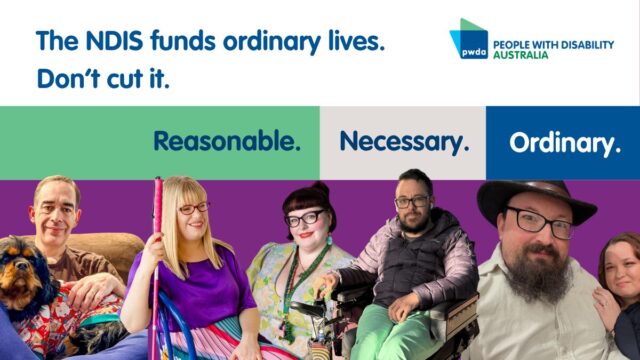
Our campaign is about showing what the NDIS really funds:
Reasonable. Necessary. Ordinary.
You can help by:
Your voice matters.
A message to our community
We know this is a difficult and uncertain time.
You are not alone.
PWDA is in your corner.
We will be unwavering in our efforts to stop harm and protect the supports that make ordinary life possible
Stay up to date with all of our news and action.