How do we turn rights on paper into rights in practice?
Twenty years ago, the United Nations adopted the Convention on the Rights of Persons with Disabilities (CRPD), setting out the human rights of people with disability around the world.
The CRPD was a landmark. But rights written into an international convention only matter if people can experience them in their everyday lives.
For people with disability, that means being able to make decisions about our own lives. It means having a genuine say in the policies and systems that affect us. It means being able to access our communities, education, work, housing, healthcare and justice on an equal basis with others.
Twenty years on, the challenge is increasingly clear: how do we turn rights on paper into rights in practice?
That question has been at the centre of PWDA’s human rights work this year, from the United Nations in New York to a room full of disability advocates, lawyers and academics in Sydney.
And across those conversations, three lessons have stood out.
Lesson one: Being heard is not the same as having influence
“Nothing about us without us” has long been a defining principle of the disability rights movement.
But participation can become meaningless if people with disability are invited into a process only after the important decisions have already been made.
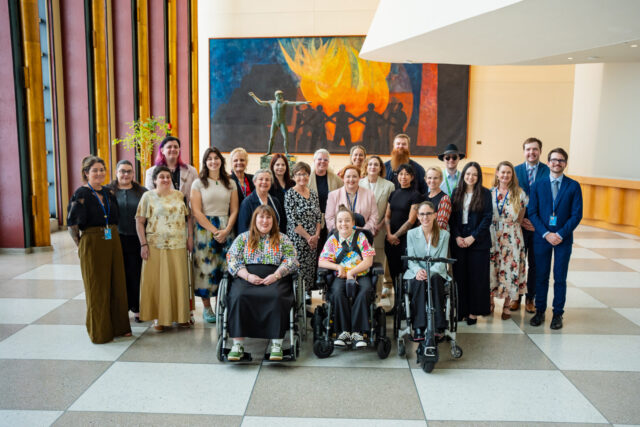
At the 19th Conference of States Parties to the CRPD (COSP19) in New York, PWDA joined disability organisations, governments and international organisations from around the world to examine progress on disability rights.
One message came through strongly: consultation is not the same as co-design.
At a COSP19 side event co-hosted by PWDA, speakers explored what genuine co-design with people with disability should look like.
It means involving people with disability from the beginning. It means having a role in defining the problem, setting priorities and shaping the process, not simply being asked for feedback as part of general consultation processes.
Most importantly, it means sharing power.
PWDA delegates Lee-Anne Pringle and Bobbie Trower reinforced this message in their contributions at COSP19, speaking about autonomy, supported decision-making, *intersectional discrimination and the need for people with disability to have genuine influence over decisions affecting our lives.
*Intersectional discrimination means people with disability who may be treated unfairly or face extra barriers for more than one reason. This could be because of their disability, race, gender, sexuality, where they live or how much money they have.
The lesson for Australia is clear. If we want better policies and systems, people with disability cannot simply be consulted about them. We need to help design them.
Lesson two: Progress must include all of us
The CRPD applies to all people with disability.
Yet people who experience multiple and intersecting forms of discrimination can still be excluded from the very processes intended to advance disability rights.
At COSP19, Bobbie spoke about the importance of recognising that people with disability are not one homogeneous group. Our experiences are also shaped by factors including gender, sexuality, race, culture, age and socioeconomic circumstances.
This matters when we think about how Australia measures progress.
A system cannot be considered truly accessible or inclusive simply because it works for some people with disability.
Our measure of progress must include the people experiencing the greatest barriers.
That requires governments and organisations to deliberately seek out voices that are less often heard and remove the barriers that prevent people from participating.
It also means recognising that inclusion is not achieved by inviting diverse people into systems that were never designed with them in mind. Those systems themselves may need to change.
Lesson three: Rights need accountability
Perhaps the biggest lesson 20 years after the CRPD is that commitment alone is not enough.
Australia ratified the CRPD in 2008. Since then, there has been significant progress in disability rights. But people with disability continue to experience discrimination, exclusion and barriers to exercising many of the rights the Convention promises.
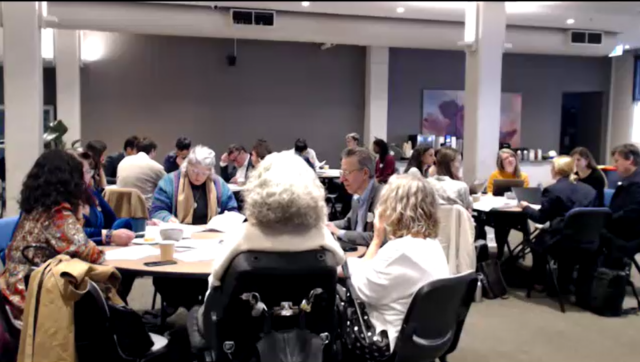
That gap between commitment and lived experience was at the heart of PWDA’s Commitment to Change: Advancing the CRPD in Australia and New Zealand forum in Sydney.
Together with the Australian and New Zealand Society of International Law and Western Sydney University School of Law, we brought people with disability together with disability rights leaders, advocates, academics and lawyers to examine a practical question: how well are we actually implementing the CRPD?
Australian Disability Discrimination Commissioner Rosemary Kayess and New Zealand Disability Rights Commissioner Prudence Walker helped open that conversation, reflecting on both the progress made and the roadblocks that remain.
Participants then worked across the articles of the CRPD to identify where rights are being realised, where the gaps remain and what could help shift them.
The discussions reinforced something fundamental: we need ways to hold governments accountable not only for the commitments they make, but for the outcomes people with disability experience.
That is why PWDA will use the findings from the forum to help develop a CRPD implementation scorecard, building a practical tool for assessing Australia’s progress against the Convention and strengthening future advocacy.
From New York to Australia, the challenge is the same
International human rights forums can sometimes feel a long way from everyday life.
But the CRPD is ultimately about very practical things.
Can you choose where and with whom you live? Can you get the information you need in a format you can access? Can you make decisions about your own life? Can you enter a building, use a service, find a home, get an education or go to work without being excluded because of disability?
Those everyday experiences are where the success of the CRPD should be measured.
Twenty years after its adoption, we do not need fewer conversations about disability rights. We need those conversations to lead to action.
That means sharing power with people with disability, ensuring progress includes all of us, and creating stronger accountability for turning rights into reality.
PWDA will continue taking the voices and expertise of people with disability to international human rights forums. But just as importantly, we will keep bringing those lessons home and using them to push for change where human rights matter most: in the everyday lives of people with disability.